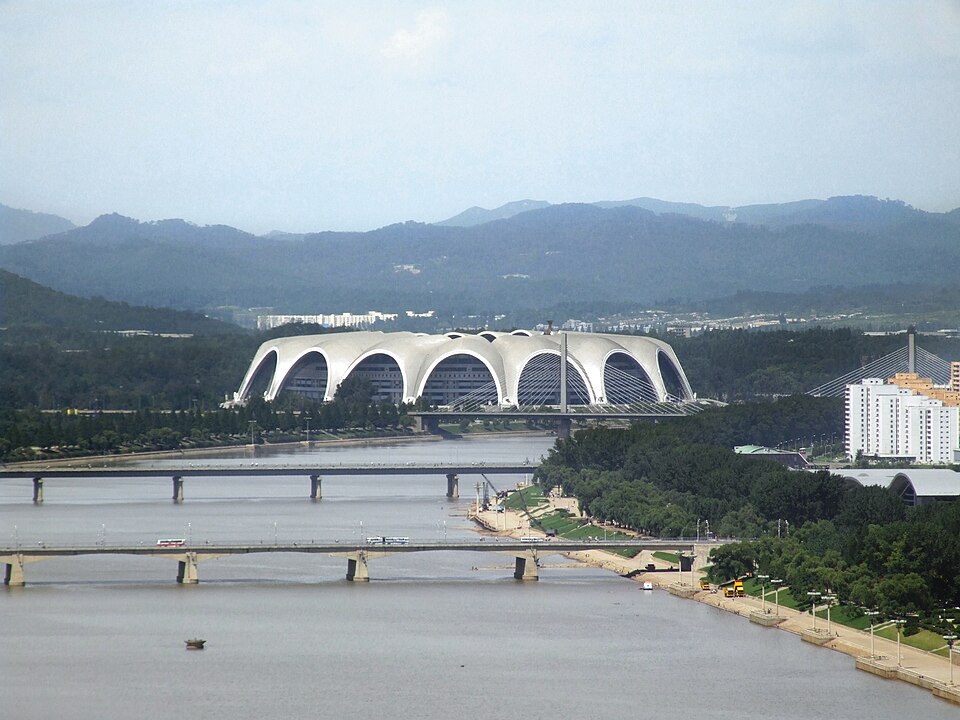
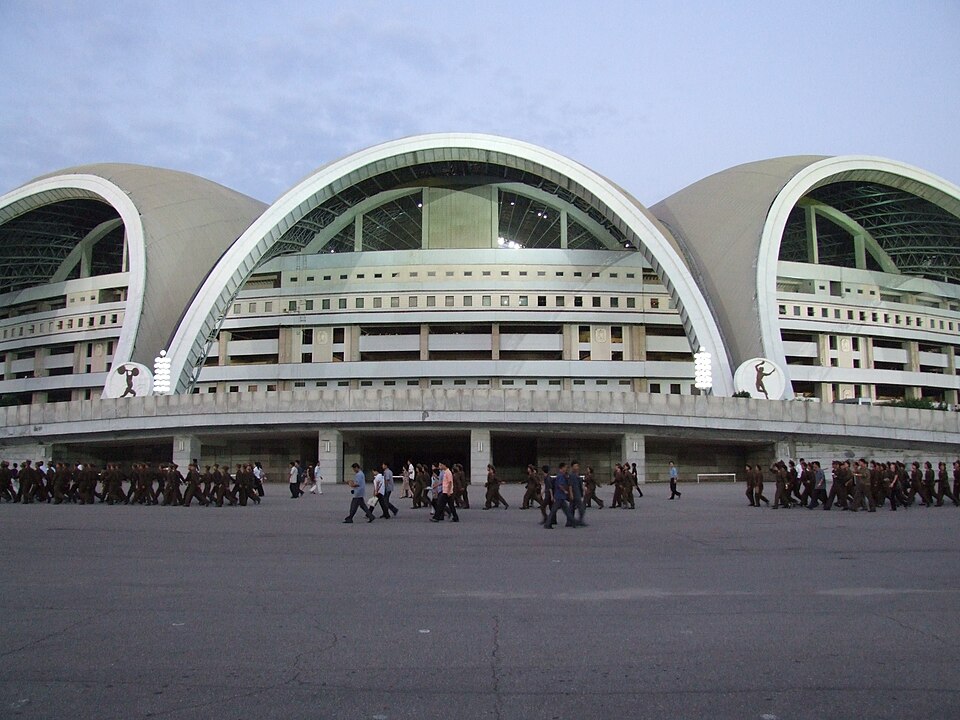
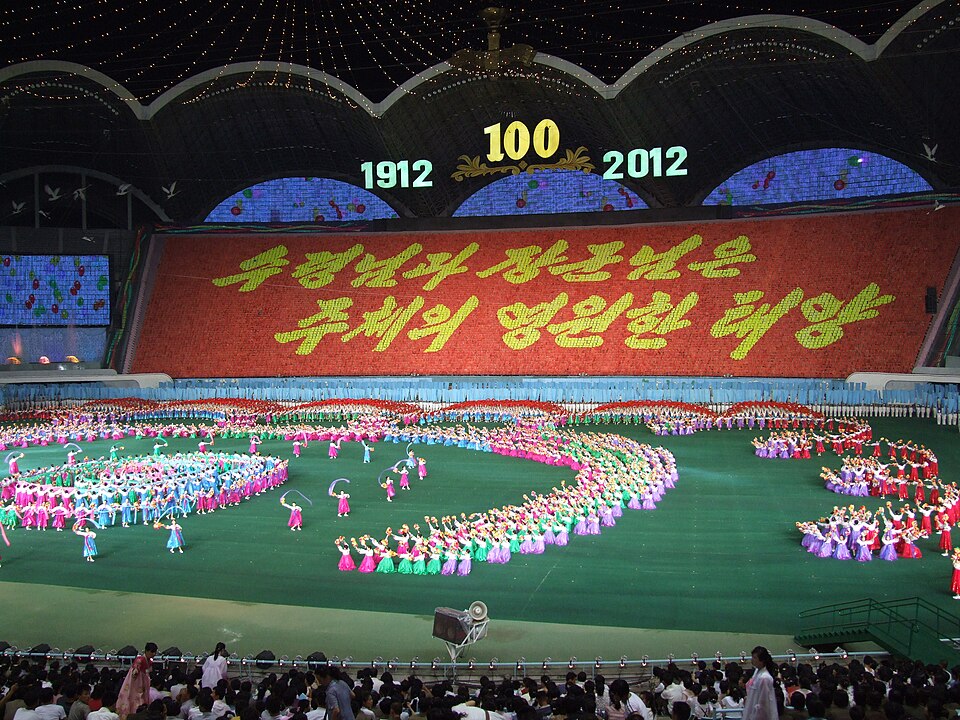
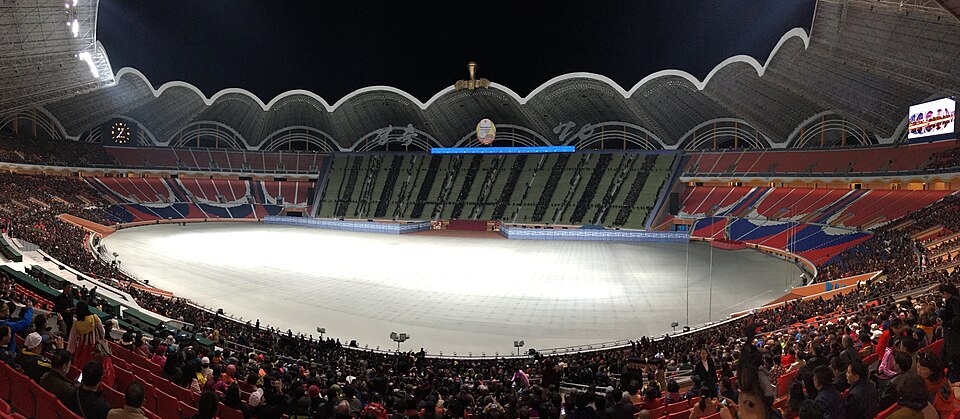
Rungrado 1st of May Day Stadium is present on Rungra Island, Pyongyang, North Korea that is spread over an area of 20.7 hectares (51 acres). The stadium is used to host football matches and some athletics events and moreover it is often used for the mass games of the Arirang festival.
History of Rungrado 1st of May Stadium
The Rungrado 1st of May Stadium, commonly known as the May Day Stadium, is a multipurpose stadium located on Rungra Island in Pyongyang, North Korea. It opened on 1 May 1989, and its name refers to May Day (International Workers' Day).
The stadium is one of the world's largest stadiums. Its originally reported capacity was approximately 150,000, while its current seating capacity is generally reported at around 114,000. This makes it one of the largest stadiums in the world, although India's Narendra Modi Stadium is now generally regarded as the world's largest by seating capacity.
History and Major Events
Construction of the stadium was part of North Korea's effort to demonstrate its economic and organizational capabilities and to project the country as a major Korean state. The stadium's first major event was associated with the 13th World Festival of Youth and Students, held in Pyongyang in 1989.
The stadium has subsequently been used for football, athletics, mass gymnastics, cultural performances, political celebrations and large national events. It became particularly famous as the principal venue for the Arirang Mass Games, enormous synchronized performances involving tens of thousands of performers.
In 1995, the stadium hosted the famous Collision in Korea professional wrestling event, held on 28–29 April. Attendance figures are disputed and vary considerably by source; North Korean claims and reports have put the second day's attendance as high as approximately 190,000, making it one of the largest-attended wrestling events ever reported.
The stadium underwent a major renovation beginning in 2014, including extensive work on its roof, interior facilities and seating. It reopened in 2015, rather than 2016.
Political and State Events
The stadium has also been used for major political and diplomatic events.
In September 2018, during the third inter-Korean summit in Pyongyang, South Korean President Moon Jae-in addressed a huge audience at the stadium alongside North Korean leader Kim Jong Un. The event was notable because Moon became the first sitting South Korean president to deliver a public speech to a North Korean audience.
In June 2019, Chinese President Xi Jinping visited Pyongyang during the 70th anniversary year of China–North Korea diplomatic relations. A large-scale mass gymnastics and artistic performance titled “Invincible Socialism” was presented in his honor at the stadium.
Architectural Features
The stadium is particularly recognizable because of its distinctive roof.
Its 16 large roof sections form a shape resembling a magnolia blossom or an open parachute. The design is intended to give the stadium a monumental and distinctive appearance.
According to North Korean figures, the stadium has:
16 roof arches
A roof reaching approximately 60 metres (197 feet) above the ground
A main playing field of approximately 22,500 m²
Total floor space of approximately 207,000 m²
The complex contains considerably more than a football field and athletics track. Facilities have included swimming facilities, table-tennis rooms, indoor training areas, athlete accommodation, medical facilities, offices, referee and coaching facilities, and other support spaces.
Sports and Uses
Although football is one of its principal sporting uses, the stadium is a multipurpose facility. It has hosted:
Football
Athletics
Professional wrestling
Mass gymnastics and artistic performances
Large sporting and ceremonial events
The stadium is arguably better known internationally for the Arirang Mass Games and enormous state performances than for regular football matches.
Records and Significance
The Rungrado 1st of May Stadium has frequently been described as the world's largest football stadium by capacity, although the exact ranking depends on whether historical or current seating figures are used.
It has also been associated with several attendance records. The reported 190,000 spectators for the 1995 Collision in Korea event is particularly famous, although the accuracy of that figure is debated.
The stadium remains one of North Korea's most important architectural landmarks and serves both a sporting and political-symbolic role. Its enormous scale and distinctive design were intended not simply to provide a venue for sport, but also to demonstrate the power, organization and ambitions of the North Korean state.
Trivia
-
 The Arirang Festival of gymnastic and artistic performance was acknowledged by the Guinness Book of Records as the biggest gymnastic show with 100,090 participants at the Rungrado May Day Stadium in 2007.